
The right party bus has a confirmed seat for every guest, enough usable storage and a layout suited to your trip. A capacity number alone cannot tell you whether the interior works for a prom group in formalwear, a wedding party carrying bags or fans bringing tailgate equipment.
This guide covers planning for groups of 14–52. Browse our NYC fleet examples to see styles, then request the exact available vehicle, photos and legal seating capacity for your date.

Compare vehicle classes
| Planning class | Groups to discuss | What to check |
|---|---|---|
| Sprinter-style vehicle | Up to about 12–14 | Exact seats, entry height and bag space |
| Small party bus | About 15–20 | Bench arrangement, access and room for belongings |
| Mid-size party bus | About 24–30 | Usable seating, aisle and entertainment features |
| Large party bus | About 35–52 | Confirmed capacity, boarding time and storage layout |
These are comparison classes, not a promise that every seat count or model is available. If your headcount falls between classes, request the next suitable available vehicle rather than rounding down. A 20-seat vehicle is not suitable for 22 passengers.
Capacity and comfort are different questions
The booked vehicle must accommodate every passenger within its confirmed legal capacity. Comfort then depends on the actual layout and what your group is carrying. Avoid universal rules about inches of bench space or a fixed percentage of “usable seats”: conversions vary, and those formulas are not a substitute for checking the vehicle.
Tell the team if guests have bulky formalwear, winter coats, large bags or accessibility needs. Request current interior photos or video, and ask whether a viewing is possible. A vehicle’s exterior size does not establish its interior headroom or luggage capacity.
For a group around 14
A Sprinter-style vehicle may suit a smaller birthday, dinner or wedding group when the seating and storage work. If you have exactly 14 guests plus substantial luggage or elaborate gowns, compare a larger option too. Ask about the entry step, handholds and actual headroom instead of assuming every Sprinter is a stand-up party bus.
A practical way to shortlist the right size
Start with the number of people who will actually board, including children, photographers or coordinators traveling with the group. Then list what must travel with them. Finally, check the route and boarding requirements. That order avoids choosing a vehicle for its lighting or appearance before establishing whether it can do the job.
Ask for two suitable options when the group is between sizes. Seeing the price, seating and storage differences side by side is more useful than guessing how comfortable a generic capacity class will feel. A good comparison should identify the exact offered configuration, rather than promise that all vehicles in a category are identical.
| Example group | Shortlist to discuss | Question that can change the choice |
|---|---|---|
| 12 friends going to dinner | A suitable 12–14-passenger Sprinter or larger option | Does everyone fit comfortably with coats and personal bags? |
| 22 wedding guests | A confirmed vehicle with at least 22 seats, such as an available 24-passenger layout | Will formalwear, steps and boarding access work for these guests? |
| 28 concertgoers | A confirmed 28-passenger layout or larger suitable bus | Where will bags and any approved equipment go? |
| 36 colleagues | A suitable larger layout, such as an available 40-passenger option | Is the seating comfortable for the full journey? |
| 50 guests with one itinerary | A confirmed 50- or 52-passenger option | Can the pickup and venue accommodate the offered vehicle? |
| 28 airport travelers with checked bags | A vehicle selected after baggage capacity is confirmed | Can every suitcase and carry-on be securely stored? |
These examples are shortlists, not automatic vehicle assignments. Bag sizes, accessibility needs and the particular vehicle can change the answer. Do not turn a comparison table into a promise that every model is available for your date.
What interior photos should show
Ask for a view of the entry, passenger seating, aisle and storage rather than only a wide-angle photo of the lights. A short video can make the layout easier to understand. Check whether the photographs show the actual offered vehicle or a representative example.
For lounge seating, ask how the confirmed passenger places are arranged. For a group that includes older relatives or guests who find steps difficult, the entrance and handholds may matter more than a sound system. If headroom is important, request the measurement for that specific vehicle. Do not rely on one height figure being true for every conversion.
Ask where bags go after everyone is seated. Photos taken with an empty cabin may not show the storage compromise once passengers board. The aisle, emergency exits and driver’s area must remain clear; they are not overflow luggage space.
Formalwear, winter coats and comfort
Wedding and prom organizers should describe the clothing and belongings guests will bring. Large gowns, garment bags, flowers and camera equipment can make a layout feel different from a casual night out. Compare an additional size if comfort is uncertain, but do not use a universal rule that every gown takes a fixed number of seats.
The same applies to winter trips. Twenty guests wearing heavy coats and carrying personal bags have different storage needs from the same group in summer. Ask whether coats can be stored safely while riding and whether they remain accessible during a venue stop. Avoid choosing a vehicle at maximum capacity without discussing these details.
For students, do not fill spare seats with unconfirmed late additions before checking the final rider list. For weddings, include anyone traveling with the party, such as a photographer, rather than treating working passengers as separate from the count.
Airport bags and tailgate equipment need their own count
List checked suitcases, carry-ons and oversized items separately for an airport transfer. Tell the team if passengers have golf bags, instruments, child equipment or mobility aids. A seating capacity of 40 or 50 does not establish room for the same number of full-size suitcases.
For a stadium outing, provide the quantity and approximate size of coolers, chairs and food containers. Ask where they can be secured and whether the operator allows the proposed equipment. A bus without suitable baggage storage may still suit a group traveling lightly; it may be unsuitable for the same group carrying a full tailgate setup.
Do not assume under-floor storage is standard on every large party bus. If transport for heavy luggage is your priority, describe that first and ask about the available vehicle styles. The right recommendation may differ from the most photogenic lounge interior.
Pickup access can change the vehicle choice
Send the full pickup and venue addresses before confirming a large bus. Narrow approaches, turning space, low branches, steep driveways and loading restrictions can affect the practical plan. The operator needs to assess the actual offered vehicle and route.
A Sprinter is smaller than many large buses, but it cannot automatically use every driveway or residential street. Likewise, a large bus may serve an urban event using a permitted loading location that involves a walk. Tell the team if curbside proximity is essential because of mobility or timing needs.
Where a different meeting point is proposed, check that the group has permission to assemble and that guests can reach it safely. A nearby shopping center or school parking lot is not automatically available for private charter pickup.
One large bus or two smaller vehicles?
One vehicle can simplify headcounts, keep a social group together and avoid coordinating two arrivals. Two vehicles can be useful when guests start in different places, need different return times or have access requirements that are easier to accommodate separately.
For a wedding, an early family return and a later final return may favor separate movements. For a group with one common pickup and a fixed return, a single larger vehicle may be simpler. Compare both complete quotes and schedules; do not assume one choice is always a fixed percentage cheaper.
When repeat trips are proposed, include the entire vehicle cycle. Forty confirmed seats cannot carry 80 guests at once. A second departure requires boarding, travel, unloading and the return to collect the next group, all before the arrival deadline.
Confirm the features that matter to your trip
Write a short priority list: confirmed seats, accessible boarding if needed, baggage storage, climate control, audio connection and any restroom requirement. Then ask the team to distinguish essential needs from optional preferences. This makes it easier to compare genuinely suitable vehicles.
Restrooms are available only on some configurations; confirm the particular offer and any usage conditions. Do not assume all 40-passenger buses lack them or that every 52-passenger bus has them. The same applies to entertainment equipment, refreshment areas and interior poles. If a layout feature is unsuitable, request another confirmed option rather than assuming it can be removed.
Party bus size questions
Can 15 people ride in a 14-passenger vehicle?
No. Every passenger must fit within the confirmed legal capacity. Ask for the next suitable available configuration.
Should we always book extra seats?
Extra room may be useful, but there is no universal percentage. Compare the real layout, belongings and price. Any anticipated headcount increase should be discussed before confirming.
Can we upgrade if more guests join?
Ask as soon as the headcount changes. An upgrade depends on availability, terms and any price difference; it is not guaranteed by giving a particular amount of notice.
Does the largest bus have the lowest price per person?
Only if the final total and number of paying guests make it so. Compare the complete trip cost using committed contributors, not every advertised seat.
Seven Fleet Options to Compare
Start with the group size and layout that suit your trip, then ask us to check availability for your date.

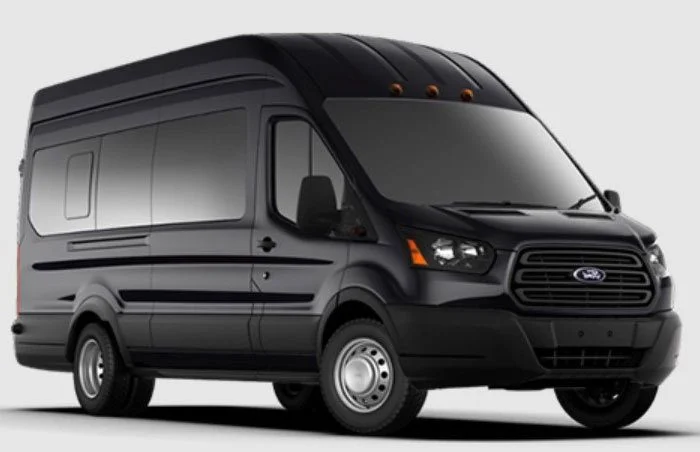
12–14 Passenger Black Mercedes Sprinter Party Bus
Compare for roughly 12–14 passengers.


30-Passenger Luxury Party Bus
A 30-passenger layout for medium-to-large groups.
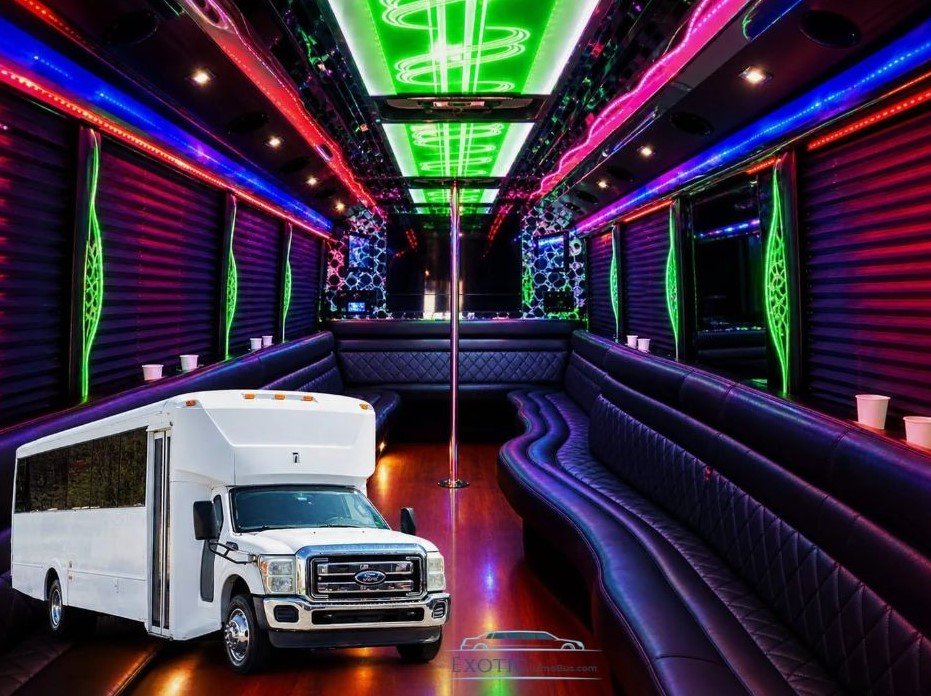
30-Passenger Party Bus With Pole
Another 30-passenger configuration with a different interior.

40-Passenger Luxury Party Bus
Compare for a group that needs more than 30 seats.

52-Passenger VIP Club Party Bus
Discuss this class for groups approaching 52 passengers.
Photos show fleet examples. The exact offered vehicle, legal seating capacity, features and availability are confirmed for your date. Share any luggage, equipment or accessibility requirements when requesting your quote.
Not sure which one fits? Send your headcount and itinerary. We will help compare available options.
For groups around 20–30
This range can work for a birthday outing, combined friend group or smaller prom party. Compare a 20-passenger style with a 30-passenger style, depending on confirmed attendance.
Check where personal belongings go and how people reach their seats. Bluetooth, TVs, lighting and beverage areas vary. A listing photo does not guarantee that every offered bus has the same equipment.
For groups around 35–52
A larger vehicle can keep a wedding group, company outing or fan club on one schedule. Compare 40-passenger and larger-group examples, then confirm the particular option offered for your date.
Plan extra boarding and regrouping time. Designate one organizer, circulate a meeting location and check attendance before departure. For 51–52 guests, ask specifically for a suitable confirmed vehicle; never assume a 50-passenger listing has spare capacity.
Match the vehicle to the occasion
- Weddings and proms: explain formalwear, photo stops and the timing of venue entry.
- Holiday tours: share walking needs, winter clothing and stroller requirements.
- Stadium trips: list coolers, chairs and equipment; get storage approval before loading.
- Airport transfers: provide both passenger and bag counts, including oversized items.
A bus with an open-looking interior is not permission to stand or dance while it is moving. Follow the driver’s instructions and use the seating and restraints provided.
Compare the full cost
A larger bus may reduce the per-person share if more paying guests join, but it can also cost more overall. Compare complete quotes for the same hours, route and included charges. Count only confirmed attendees when deciding what each person owes.
Find the right fit
Send your confirmed headcount, occasion, date, route, luggage list and preferred features. Request a vehicle recommendation and quote or call (888) 534-8884. The written offer should identify the vehicle and capacity before a deposit.
Get Help Choosing Your Party Bus
Share your headcount, occasion, date, route and luggage or equipment needs. We will check a suitable available configuration.
Prefer to talk? Call (888) 534-8884. Submitting this form requests a quote; it does not confirm a reservation.
