

A wedding guest shuttle works best when the last guest arrives comfortably before the ceremony and everyone knows how to get home. Start with actual riders, hotel addresses and realistic round-trip timing—not simply the number of seats shown in a vehicle photo.
How many shuttle buses do wedding guests need?
Count guests who have confirmed they want transportation, then assign them to each departure. Hotel room blocks are useful for communication, but room totals do not reliably predict shuttle riders. Include children and attendants in the seating count, and ask about mobility equipment, strollers and personal bags.
The required number of buses depends on both seats and timing. A 52-passenger bus cannot move 100 guests in one trip. It may handle two departures only if the route and ceremony deadline leave enough time for a full return cycle. Compare our party bus size guide for seating considerations.
Calculate the complete shuttle cycle
For a repeating hotel shuttle, allow for boarding, outbound travel, unloading, the empty return and a traffic buffer. Do not schedule departures ten minutes apart just because the hotel is ten minutes from the venue.
| Cycle component | Illustrative allowance |
|---|---|
| Hotel boarding | 10 minutes |
| Hotel to venue | 20 minutes |
| Unloading | 5 minutes |
| Return to hotel | 20 minutes |
| Contingency | 10 minutes |
| Total between hotel departures | 65 minutes |
These figures illustrate the calculation; they are not a route estimate. If 80 confirmed riders use a vehicle with 40 confirmed seats, two departures are needed. In this example, departures would be at least 65 minutes apart. The second departure must still arrive before the venue’s guest-arrival deadline. A second vehicle may be more practical than sending half the guests unusually early.
Build the schedule backward from the ceremony
Ask the coordinator when guests should be seated, not just when the ceremony begins. Work backward through unloading, the drive and boarding. Separate wedding-party photography from guest shuttles if the schedules conflict. A driver cannot make up time lost during portraits or bypass photo permits, road restrictions or venue access rules.
| Movement | What to confirm |
|---|---|
| First hotel departure | Named riders, boarding window and organizer |
| Final outbound arrival | Venue-approved arrival deadline and unloading point |
| Optional early return | Who needs it and whether a separate vehicle is required |
| Main return | Reception end, boarding time and hotel stops |
| Final sweep | Named coordinator checks for remaining riders |
Send a simple itinerary to guests with the hotel entrance, departure time, return choices and a contact number. Assign one organizer to communicate changes to the driver; the couple should not need to manage boarding during the reception.
Choose the layout as well as the capacity
Our listed options range from 12–14-passenger Sprinters through larger party buses up to 52 passengers. Confirm the specific vehicle’s legal seating, step access and luggage storage. Dresses, mobility needs and bags may make a larger layout preferable, but there is no universal percentage by which formalwear reduces capacity.
Ask about an accessible vehicle when needed; a larger bus does not automatically provide wheelchair access. For wedding parties, confirm space for garment bags without blocking aisles or exits. See our NJ party bus options and NYC fleet and pricing information.
Compare continuous service with separate transfers
A vehicle retained throughout the wedding and two separately scheduled transfers can have different minimums, availability and costs. Ask whether the same vehicle remains available between outbound and return service. Waiting time is not automatically free, and an eight-hour booking cannot cover a ten-hour timeline.
For planning context, our NYC page lists indicative hourly pricing across vehicle sizes from about $250 to $600 or more. Your wedding quote depends on the actual route, date, size and hours. Use the pricing guide to compare inclusions rather than treating an hourly example as a package offer.
A workable wedding-day transportation plan
Think of the itinerary as several separate jobs: getting the wedding party to preparations or photos, delivering guests before the ceremony, and returning guests after the reception. Some jobs can share a vehicle; others happen at the same time. Put every movement on one timeline before deciding how many vehicles to reserve.
For example, a wedding-party photo trip that runs until 4 p.m. cannot also provide a hotel departure at 3:45 p.m. A second vehicle may solve that conflict, while moving the photo session may solve it without adding transport. Discuss the tradeoff with the photographer and coordinator before treating either schedule as final.
Give each hotel a real departure assignment
Ask guests to choose a departure when they RSVP for transportation. Keep a list by hotel and wave, including the return option each person expects to use. A total of 70 interested guests is much less useful than knowing that 38 need the first hotel departure and 32 need the second.
For multiple hotels, compare a single collection route with separate departures. A collection route uses fewer vehicles but makes the first group spend longer onboard. It also needs permission to load at each property. Two hotels that look close on a map may have different entrances, one-way approaches or a difficult turn for the offered bus.
Keep the final arrival protected
Choose the latest acceptable venue arrival with the coordinator, then leave a margin for guests to walk in and find their seats. Avoid building a schedule that succeeds only if every boarding takes two minutes and every traffic light is green. If the second wave is tight, change the departure plan before sending invitations or travel details.
For an NYC pickup followed by a New Jersey ceremony, ask the transport provider to assess the actual cross-river route for your day and time. A Saturday afternoon, weekday rush hour and holiday weekend deserve different assumptions. The itinerary should identify who will approve a route or timing change if road conditions shift.
Guest communication that prevents missed departures
The best shuttle schedule is one guests can understand at a glance. Publish the boarding location, boarding time and actual departure time as separate details. “Shuttle at the hotel” leaves too much to interpretation when a property has a lobby entrance, conference entrance and rear driveway.
Use wording such as the template below once the schedule has been agreed. Replace every bracketed field before sharing it. If there are two outbound waves, list both and tell guests which one they are assigned to; do not leave 80 people to assume they can all take the last bus.
Wedding transportation: Our guest shuttle will board at [hotel name and exact entrance]. Please be ready at [boarding time] for a [departure time] departure. You are assigned to [wave or departure]. The shuttle will arrive at [venue] before the ceremony. Return departures are [confirmed times] from [approved meeting point]. Please contact [organizer and phone] if your plans change or you need help locating the shuttle.
Add this information to the wedding website, hotel welcome message and final guest reminder. A short message the day before can ask riders to confirm they are still using the service. Keep the driver’s contact arrangements within the agreed process rather than having dozens of guests send competing instructions.
Assign two simple roles
A hotel contact checks names and helps guests find the boarding point. A venue contact confirms when the arrival group is clear and manages return boarding. These can be relatives, members of the planning team or other agreed organizers. The important part is that they have the same itinerary and know who can authorize changes.
Give each contact a passenger list and the provider’s dispatch details. Let the couple enjoy the day. A missing guest or an extra hotel stop should not require interrupting the ceremony preparations to discover who is responsible.
Plan the return with the same care as the ceremony
Guest needs often split after dinner. Older relatives, families with children and guests with an early flight may want an earlier return. Others may stay through the final song. Ask about that demand in advance so the first return does not unexpectedly remove the only vehicle available for the rest of the evening.
If one bus is making an early hotel trip, calculate when it can return to the venue for the main departure. Include unloading at the hotel and the empty drive back. If the reception ends before that cycle is complete, consider another vehicle or a different early-return time. Tell guests whether missing a departure means waiting for another scheduled trip or arranging their own ride.
Confirm the final hotel stops as well. A late-night detour for a small group changes the finish time for everyone already onboard. An after-party at a separate location should appear as its own movement with a headcount, address and return plan; it should not be an informal addition discovered when the reception ends.
Comfort, access and weather details worth settling early
Tell us about guests who cannot manage steps, need extra boarding time or travel with mobility equipment. Ask for the exact access solution before booking. Photographs of a spacious interior do not establish that a particular wheelchair, walker or stroller can be accommodated safely.
For formalwear, look at the seating arrangement and entry rather than relying only on the passenger number. Ask where flowers, garment bags and personal items can travel securely. A smaller wedding party may prefer a less crowded layout, but a vehicle should never be described as having removable fixtures unless that has been confirmed for the actual booking.
Rain can change how quickly guests board and how far they can comfortably walk from a loading point. Ask the hotel and venue about a sheltered waiting area, then share the arrangement with guests. The bus still needs an approved place to stop; a covered entrance is not automatically suitable for a large vehicle.
What to send when requesting a wedding shuttle quote
Send one clear itinerary with your wedding date, each pickup and destination address, ceremony seating deadline, reception finish and rider counts for every movement. Include early returns, wedding-party photo stops and any after-party. Flag luggage, accessibility needs and whether children are traveling.
Ask for continuous service and separate transfers to be priced against that same itinerary when both could work. Compare total coverage, not just an hourly rate. A lower figure can be misleading if it omits a return trip, starts the clock earlier than expected or leaves parking and tolls unresolved.
Before paying, check the deposit, balance deadline, cancellation terms and overtime rules in the written agreement. Confirm who pays venue parking and whether gratuity is included. Keep the final itinerary with the booking so that the agreed vehicle, service window and return plan are easy for everyone to reference.
Compare Vehicles for Your Wedding Shuttle
Compare layouts for your wedding party and guest transfers. One vehicle may suit the wedding party while separate vehicles handle hotel guests.

12–14 Passenger Black Mercedes Sprinter Party Bus
For a smaller wedding party or family transfer.


30-Passenger Luxury Party Bus
Compare for guest transfers between hotel and venue.
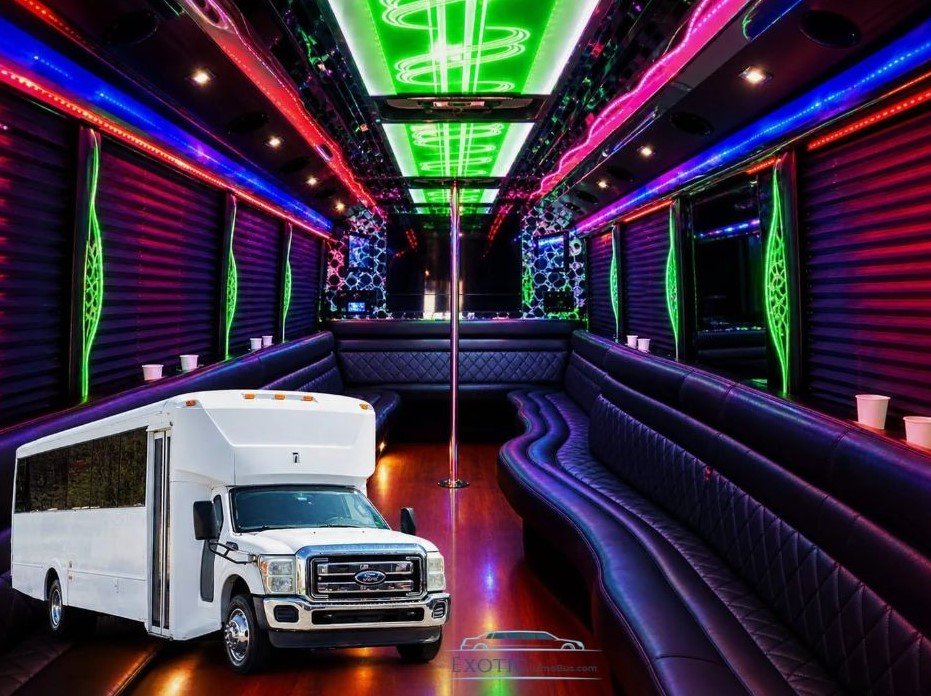
30-Passenger Party Bus With Pole
An alternative layout; discuss formalwear and seating.

40-Passenger Luxury Party Bus
For larger groups; confirm the offered amenities.

52-Passenger VIP Club Party Bus
Compare for a large guest movement, subject to access.
Photos show fleet examples. Confirm the offered vehicle, legal seating capacity, amenities, luggage space and availability for your date. Tell us about accessibility needs before booking.
Wedding shuttle questions
Can one bus serve two hotels?
Sometimes. Add both loading windows, the detour and travel time to the itinerary. Separate pickup vehicles may protect the ceremony schedule when hotels are far apart.
Should the wedding party use the guest shuttle?
Only if the photography and ceremony schedule fit the guest movements. A separate wedding-party vehicle avoids competing departure times.
What should the written quote include?
Confirm the vehicle, seats, complete service hours, stops, waiting, tolls, parking, gratuity, overtime, cancellation terms and return arrangements. Share the venue coordinator’s access instructions before the trip.
Request Your Wedding Shuttle Quote
Share your wedding date, hotel and venue addresses, confirmed rider count, arrival deadline and return times. We will help compare suitable transport.
Call (888) 534-8884 to discuss your route. Submitting this form requests a quote; it does not confirm a reservation.
